Friday, July 18, 2025

 A Castle, a Queen, and a Courtship: 
Elizabeth I at Kenilworth


            From the 9 to 27 July 1575, Queen Elizabeth I was the honored guest at Kenilworth Castle—a visit drenched in pageantry, poetry, and longing. For nineteen glorious days, the castle was transformed into a stage of elaborate entertainment designed to dazzle the Virgin Queen and, perhaps, to win her heart. Beneath the spectacle, however, pulsed a deeper story: that of Robert Dudley, Earl of Leicester, whose grand gestures masked a quiet yearning. Every fountain, masque, and melody seemed to whisper a single question—might this queen finally chose love?


Queen Elizabeth I and Robert Dudley, Earl of Leicester, Nicholas Hilliard, c. 1575

            The castle belonged to Robert Dudley, Earl of Leicester—the man who had stood beside Elizabeth for years, not merely as a trusted courtier, but as the subject of whispered love and endless speculation. Their bond had captivated the courts of Europe: she, the resolute Virgin Queen, who claimed she was married to her people; he, the ever-present favorite, whose heart seemed forever pledged to her alone. From their earliest days at court, their closeness had raised eyebrows and stirred gossip—dinners taken in private, glances exchanged in plain view, and an intimacy that danced just outside the bounds of what was proper. Though scandal and tragedy had often overshadowed their connection, Leicester remained a constant- ambitious, devoted, and perhaps the only man who truly knew the woman behind the crown. Kenilworth Castle was more than his home; it was his love letter in stone, and in the summer of 1575, he opened its gates in the hope that all his lavish displays might finally win her hand.


            New chambers were constructed for the Queen, outfitted with the finest tapestries, gilded furnishings, and every comfort befitting a monarch. A majestic gatehouse was raised in her honor, its very architecture, a tribute to her majesty. The surrounding gardens bloomed with intoxicating color and scent—roses, lilies, and sweet herbs arranged with poetic care, each one chosen not just for beauty, but for symbolism. Every path she walked, every blossom she brushed against, every shimmer of candlelight that flickered through the twilight was carefully curated to enchant her senses.


            Elizabeth was enveloped in a dreamscape of feasts and revelry: grand banquets served on silver platters, thrilling hunts through lush Warwickshire woods, intricately staged masques with allegories of virtue and love, and music that floated through the castle wall like sighs in the night. The culmination came with fireworks that split the sky—light and fire dancing above the towers of Kenilworth as if heaven itself celebrated her presence. It was a courtship on a royal scale, a living sonnet composed not in ink but in stone, silk, music and flame.


            But the proposal never bore fruit. Whether out of political caution, personal conviction, or the careful balancing act of sovereignty, Elizabeth—ever the monarch first—chose not to marry. The weight of her crown, the expectations of her council, and the precarious dance of European alliances made any union fraught with risk. For all Leicester’s efforts, for all the unspoken promises, the Queen remained steadfast in her solitude.


            Yet in those golden summer weeks, within the rose-scented halls and candlelit chambers of Kenilworth, love reigned—if only in gesture, not in vow. Theirs was a romance suspended in time: tender, complicated, and unresolved. No ring was exchanged, no future pledged, but something unspoken passed between them—an understanding, a shared history, a quiet ache. Though Elizabeth left the castle unmarried, she left with a memory steeped in longing and loyalty, one that would linger in both their hearts long after the gates of Kenilworth had closed behind her.


            Centuries later, Kenilworth stands in a quiet testament to an extraordinary moment in Elizabethan history. Though the grandeur has faded and the music long since ceased, the story still lingers—not as a tale of triumph or tragedy, but of possibility. It reminds us that even the most powerful hearts are not untouched by longing, and that love, however restrained, can leave an enduring mark. At Kenilworth, politics paused, and for nineteen days, the Queen of England was simply Elizabeth—admired, adored and, perhaps, tempted to imagine a different fate.

©All Things Tudors

Friday, July 11, 2025

 
THE SIEGE OF THE TOWER OF LONDON, JULY 1460


In the summer heat of July 1460, the ancient stones of the Tower of London bore witness to one of the most dramatic and violent chapters of the Wars of the Roses. For two relentless weeks- from the 2nd to the 16th—London itself became a battleground as Yorkist forces clashed with the defenders loyal to King Henry VI. The Tower, a symbol of royal power and the fortress of the Lancastrian regime, came under siege from within its own capital. As cannon fire echoed along the Thames and the cries of the wounded rose above the city, the struggle for England’s crown reached a fever pitch. This was not just a military confrontation, it was a turning point in the brutal civil war that would define a generation.


Tower of London, May 2023 © All Things Tudors

Richard Neville, Earl of Salisbury; his son, Richard Neville, Earl of Warwick—known later as the “Kingmaker”; and Edward, Earl of March—son of Richard, Duke of York—were three of the most powerful figures in the Yorkist cause. United by blood, ambition and deep frustration with the weak rule of Henry VI, they believed the House of York had a superior claim to the throne through descent from Edward III. Richard, Duke of York, was the son of Anne Mortimer, a direct descendant of Edward III’s second surviving son, Lionel of Antwerp—giving the York line a possible senior claim over the Lancastrians, who descended from Edward III’s third surviving son, John of Gaunt. The Yorkist lords also accused Henry VI’s court of corruption and misrule, blaming Queen Margaret of Anjou and her circle for the kingdom’s instability. Their military campaign was as much about restoring strong governance as it was about dynastic legitimacy—and by 1460, they were ready to fight for both.


Edward, Earl of March, later King Edward IV

And so, on 26 June 1460, a determined Yorkist force commanded by Salisbury, Warwick and March (the future King Edward IV), landed at Sandwich on the southeastern coast of England. Their landing marked the beginning of a bold military campaign aimed at challenging the authority of the Lancastrian regime. The Yorkists had sailed from Calais, a strategic English stronghold on the continent, which Warwick controlled as its captain. The passage was swift and unopposed, and upon reaching the Kentish coast, they quickly seized the port town of Sandwich, where they encountered little to no resistance.

From Sandwich, the Yorkist army advanced inland toward Canterbury, one of England’s most important ecclesiastical centers. The city, perhaps sympathetic to the Yorkist cause or unwilling to provoke conflict, opened its gates without opposition. The way with which the Yorkists took Canterbury suggested a favorable local sentiment or, at the very least, a widespread disillusionment with the ineffective rule of King Henry VI and his court.

Meanwhile, the royal army, still loyal to the crown and commanded by Queen Margaret of Anjou and her Lancastrian allies, remained stationed in the Midlands. They had positioned themselves strategically, prepared to respond to simultaneous threats. The Lancastrians anticipated that invasions might come from multiple directions- Edward of March had connections to Ireland, and Warwick’s fleet could strike from Calais-making it difficult to predict where the Yorkists would make their move. The uncertainty left the royalists at a disadvantage, unable to concentrate their forces effectively as the Yorkists advanced swiftly through Kent.

The Yorkist army advanced steadily toward London, their numbers swelling as they marched through Kent and the surrounding counties. Support for their cause grew with each passing day. Local gentry, merchants, and even former royal officials began to declare for the Yorkists, bringing with them men, arms, and valuable intelligence. By the time the army approached the capital in early July, it had become a formidable force, organized and emboldened by a string of easy successes.

On 2 July 1460, the Yorkists reached London. Rather than resist, the city welcomed them with open arms. The gates were thrown open, and the citizens, many of whom favored the restoration of good governance and the rule of law the Yorkists promised, greeted their arrival with cheers. Warwick, already popular in London due to his naval victories and reputation for order, was met as a liberator rather than a conqueror.

However, not all within the capital shared the city’s enthusiasm. Inside the heavily fortified Tower of London, a garrison of Lancastrian loyalists under the command of Thomas, Lord Scales, refused to surrender. Determined to hold the Tower for the King, Scales defied the surrounding Yorkist forces and took the drastic step of ordering cannon fire on the city itself. Shot and flame rained down on London’s streets and rooftops, striking both innocent civilians and Yorkist troops. Panic and fury spread through the city as homes were damaged, and citizens were killed by the very defenders sworn to protect them.

The Yorkists responded swiftly and decisively. Drawing on bombards and heavy artillery stolen from the Royal arsenal, they positioned their own guns to return fire on the Tower. The city, once a neutral prize in the political struggle, had now become a battlefield. The Yorkists understood that they could not secure the capital fully while the Tower remained in enemy hands.  The exchange of fire marked the beginning of a tense and dangerous standoff in the heart of London.

The Yorkist besiegers methodically cut off supply routes to the Tower, while continuing to pummel its thick stone walls. Yet even as the Tower’s defenses began to weaken, Scales remained defiant. He may have hoped for a royal victory at Northampton, which Warwick and March had departed for, or at least reinforcements from loyalist forces in the Midlands. But with each passing day, news from the north was ominously absent—and inside the Tower, provisions began to dwindle. Morale among the Lancastrian defenders fell sharply, worsened by the realization that the people of London were no longer silent spectators but actively hostile.

Public anger now boiled over. The citizens of London became active participants in the siege. Armed mobs erected barricades, maintained night watches, and patrolled the riverbanks to prevent any escape from the fortress. Several local militias, aligned with the Yorkist cause, offered their services to the commanders coordinating the assault. Calls for vengeance grew louder with each civilian casualty from the Tower’s bombardment.

Everything changed when word reached London of the Yorkist victory at the Battle of Northampton on 10 July 1460. More devastating still for the Lancastrians, King Henry VI had been captured. The political and symbolic blow was enormous—without the king, the defenders of the Tower no longer had a cause to fight for. Realizing that no reinforcements would come, and that further resistance would only bring destruction upon themselves, Scales began to negotiate surrender. Around 19 July 1460, the Tower of London capitulated. March and Warwick returned to London with the captive king in tow.

Yet surrender offered no guarantee of safety. As Scales attempted to slip away under cover of night, disguised and aboard a barge down the Thames, he was recognized by a London mob still furious over the destruction of their homes and families. Dragged from the boat, he was brutally murdered in the street—an act of mob justice that reflected the deep bitterness left in the wake of the siege. His body was left exposed near the Church of St. Mary Overie, a grim warning to any who might challenge Yorkist rule in the capital.

With the Tower now firmly in Yorkist hands and the king himself in captivity, London was at last secured. The city, which had stood at the heart of political instability for over a decade, was now the stronghold of the Yorkist regime. What followed would be a dramatic and unprecedented political maneuver: Richard, Duke of York, returning from Ireland to press not for the protection of the realm—but for the throne itself.


©All Things Tudors

Friday, September 20, 2024

The Duel That Never Happened: Henry Bolingbroke and Thomas Mowbray


    Henry Bolingbroke, Duke of Hereford, was the son of John of Gaunt. Many of us Tudor fans are aware of John of Gaunt, as the Tudor line descended from Gaunt, the third living son of King Edward III. Bolingbroke had a tense relationship with his cousin, King Richard II. Although, outside of Richard II’s few favorites, I’m quite sure everyone had a tense relationship with Richard II. It is the background of their relationship and the threat that Bolingbroke posed to Richard II, that lay the backdrop for one of the most famous duels in history.


Henry Bolingbroke, Unknown, 16c Imagined Painting, National Portrait Gallery

    Richard II was the son of the famous Black Prince, first son of King Edward III. The Black Prince died before he was able to inherit his father’s throne. Upon the death of Edward III, his grandson ascended to the throne as Richard II. Richard II had a tumultuous relationship with all his uncles, including John of Gaunt. Gaunt was the Duke of Lancaster, and as a result, was very wealthy and had vast lands. Richard II viewed Gaunt as a threat, even though Gaunt was loyal to a fault. Gaunt only had his heart set on becoming King of Castile, never King of England. Richard II knew that Henry Bolingbroke was set to inherit all of Gaunt’s wealth and power, so he kept a sharp eye on his cousin.


John of Gaunt, Duke of Lancaster, Unknown, c. 1593, Badminton House

    Tensions between Richard II, Gaunt and Bolingbroke were set to explode in 1397. Thomas Mowbray, Duke of Norfolk, had been childhood friends with Richard II. Mowbray continued to rise in favor with the king, while Bolingbroke consistently fell further. There was even a plot for the assassination of Gaunt put in motion by Mowbray and his friends. Bolingbroke did not take this lightly.


King Richard II, Unknown, c. 1390, Westminster Abbey

    As time went on, Mowbray began to fall out of favor with Richard II. Mowbray attempted to join forces with Bolingbroke in the beginning of 1397. One day, Mowbray met Bolingbroke while on the road. Mowbray informed Bolingbroke of Richard II’s plot to have them both killed. But Bolingbroke didn’t trust Mowbray. Was this information the truth? Or was Mowbray attempting to lure Bolingbroke into a treasonous plot so Richard II would be able to do away with him? Bolingbroke turned to his father for advice. Ever the loyal subject to his nephew, Gaunt told Bolingbroke to take the information to Richard II and allow him to make a judgement.


    This just happened to work to Richard II’s advantage perfectly. He immediately had both Bolingbroke and Mowbray arrested. In one quick move, Richard II was able to isolate both Dukes that constantly threatened the sole power that he desperately wanted. The conflict instantly turned into a he said, he said situation and the issue could not be resolved. The two men refused to make amends. Richard II ordered the only solution possible- the two would have to duke it out (pardon the pun!) in a duel set to take place in Coventry. An old-fashioned trial by combat was to take place. But was this really the only solution? If Bolingbroke died, his wealth and lands would be forfeit to the crown and Richard II would rid himself of his pesky cousin. 


    Invitations to the duel were dispatched throughout the Continent. It was set to be the spectacle of the year! Months of preparation went into the duel. It was bound to be a great show as both Bolingbroke and Mowbray were experienced and skilled jousters.


    The duel was set to take place on 16 September 1398. This was several months after the conflict, so the argument could be made that Richard II perhaps intended the delay to allow cooler heads to prevail. Unfortunately, that did not happen. At 9 AM on 16 September, King Richard II entered the lists, followed by Henry Bolingbroke and Thomas Mowbray. The two men went to their respective sides and prepared for combat. Armor on and weapon in hand, Bolingbroke and Mowbray climbed onto their horses. Just as the men prepared for the charge, Richard II abruptly stood up, stopping the advance. A hush fell over the crowd as confusion grew. People had travelled from near and far to be entertained by the event of the year. What was happening?


    Richard II shockingly called off the duel and walked away from the lists. The confusion would have been unbearable for Bolingbroke and Mowbray. Two men had entered the lists that morning but only one was going to exit with his life. The torment they must have endured while preparing their souls for possible death, would have been unbearable. After what was most likely an agonizing two hours, King Richard II returned to the lists with his verdict. Perhaps sensing a victory by Bolingbroke, Richard II declared the two men would not duel to the death, rather Bolingbroke was to be exiled for ten years and Mowbray for life. Bolingbroke’s sentence was later lessened to six years of exile.


    It was the most famous duel in history, that never happened. Perhaps Richard II would come to regret that decision in the years to come. Bolingbroke would later return to England, depose his cousin and become King Henry IV.

Friday, July 26, 2024


Claude of France

Queen of the Dazzling, Renaissance Court


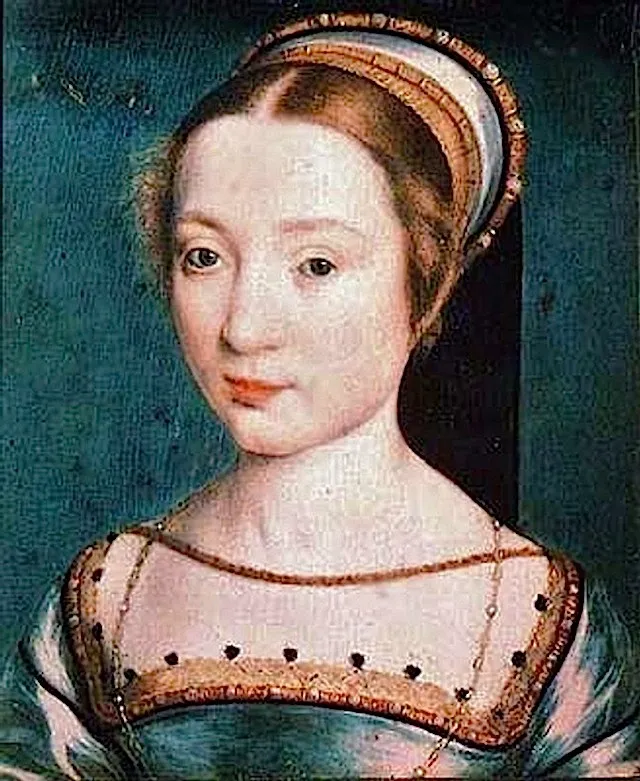
    Queen Claude of France was the eldest daughter of King Louis XII of France and his wife, Queen Anne, Duchess of Brittany. Queen Anne gave birth to Princess Claude on 13 October 1499 in Romorantin in the Loire Valley of France. Princess Claude was allegedly named after St. Claudius; a saint Anne had fervently prayed to in hopes of giving birth to a living child. It worked for Queen Anne, and it may have been passed down through Claude, as she later gave birth to many living children.


Queen Claude of France, Corneille de Lyon

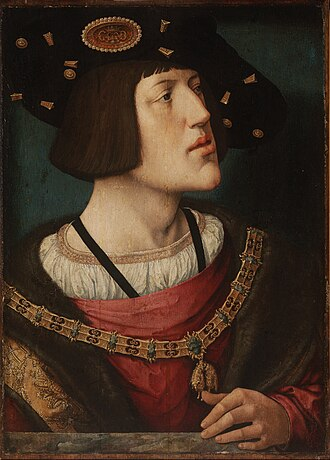
    Louis XII and Queen Anne had no surviving male heirs, and as such, Claude was the heiress of the Dutchy of Brittany. However, Claude could not inherit her father’s crown, as France ruled under Salic law. Initially Louis XII wanted to keep the Dutchy of Brittany separate from France, so in 1501, Princess Claude was betrothed to the future King Charles V of Spain, Holy Roman Emperor. This betrothal was broken off in 1505, when Louis XII changed his mind and decided Princess Claude should marry Francis, Duke of Valois, heir presumptive to the French throne.


King Charles V, Holy Roman Emperor, Bernard van Orley, c. 1519

     On 9 January 1514, Queen Anne died, and Claude became the Duchess of Brittany, in her own right. Four months later, at the age of 14, Claude, Duchess of Brittany, married Francis, Duke of Valois at Saint-Germain-en-Laye. Claude seemed disinterested in running the Dutchy of Brittany, so she handed over the rule of her lands to Francis in perpetuity.


King Francis I, Jean Clouet, c. 1515

    Claude’s father, Louis XII married Princess Mary Tudor, the sister of King Henry VIII, in October 1514, in a last-ditch effort to obtain a male heir. Part of Mary’s bridal entourage included Mary and Anne Boleyn, who were provided with a magnificent opportunity to learn at the French court.


Queen Anne Boleyn, Unknown, c. 1550, Hever Castle


    Upon King Louis XII’s death on 1 January 1515, Francis and Claude became King Francis I and Queen Claude of France. However, Queen Claude wasn’t crowned until 10 May 1517, at St. Denis Basilica. Mary and Anne Boleyn chose to stay at the French court to serve Queen Claude, rather than return to England with Mary Tudor, Dowager Queen of France. Queen Claude influenced Anne Boleyn immensely during her seven years stay at the prosperous and dazzling Renaissance court.


    Queen Claude spent the last eight years of her life in nearly constant pregnancies. In 1515, Claude gave birth to Louise, who died at the age of three. In 1516, Charlotte was born; she only lived until the age of seven. Francis, the heir apparent was born in 1518, but died at the age of eighteen, before he could inherit the throne. Henry was born in 1519 and would become King Henry II of France. Then came Madeline in 1520, who would become Queen of Scotland, and then Charles in 1522. Her last child, Margaret, was born in 1523.


    Queen Claude died on 26 July 1524 at the Chateau de Blois. Speculation of the cause of her death continues today, arguments consisting of complications from childbirth or miscarriage, exhaustion from her many pregnancies, tuberculosis, and possibly contracting syphilis from the ever-philandering Francis I. Queen Claude was laid to rest at St. Denis Basilica in a tomb designed by her son, King Henry II.

Friday, July 19, 2024


Queen Mary I

The Road to England’s First Crowned Queen Regnant


    England’s first crowned Queen Regnant was proclaimed on 19 July 1553. But who was she and how did she do it? Today, we will explore the tumultuous road Queen Mary I travelled to obtain her rightful place as Queen of England. Not for the faint of heart, this story witnesses the perseverance of a woman constantly pushed aside, denied her rights and views, and continually undermined for her sex. Undermine her no more, for on this date, Mary Tudor claimed her father’s throne.


    Princess Mary Tudor was the only surviving daughter of King Henry VIII and his first wife, Queen Catherine of Aragon. In 1553, Mary was declared illegitimate after Henry VIII’s marriage to his second wife, Queen Anne Boleyn. Elizabeth, the daughter of Henry VIII and Queen Anne Boleyn, was now the heir of Henry VIII, rather than Mary. Henry VIII did not have a legitimate male heir, at this point. After being declared illegitimate, Princess Mary was styled as “The Lady Mary”.


Queen Mary I, Antonis Mor, 1554

    Mary staunchly refused to acknowledge Anne Boleyn as Queen and Elizabeth as the rightful heir. She severely frustrated Henry VIII by only recognizing her mother as Queen and herself in the line of succession. Henry VIII and Mary did not speak for nearly three years. As a punishment to both Catherine of Aragon and Mary, Henry VIII refused to let mother and daughter be together, rather, he sent Mary to be a part of Elizabeth’s household. They were not allowed to correspond either, however, I believe they managed to get messages to each other. At least, I hope they did.


Queen Catherine of Aragon, Lucas Horenbout, c. 1525

    In 1536, after the dramatic downfall of Queen Anne Boleyn, Mary reconciled with Henry VIII. But it was at a price. Mary, who was Catholic, had to recognize her father as the Supreme Head of the Church of England, reject papal authority, acknowledge the invalidity of her parents’ marriage, and accept her own illegitimacy. With no other choice, Mary begrudgingly agreed. 1537 saw Henry VIII receive that which he longed for, for over twenty years- a legitimate son. Edward, born by Henry VIII’s third wife, Queen Jane Seymour, was now first in line of the succession. But what to do about Mary and Elizabeth?


King Edward VI, William Scrots, c. 1550

    In 1543, Henry VIII married his sixth and final wife, Queen Katherine Parr. Queen Katherine was an advocate for all of Henry VIII’s children, helping to bring them all together as a family, as best she could. It may have helped, for in 1544, Mary and Elizabeth were returned to the succession through the Third Succession Act, placing Mary as heir after Edward, and Elizabeth after Mary. However, there was still a caveat - Henry VIII never reversed Mary and Elizabeth’s illegitimacy.  


    King Henry VIII died in 1547. His son, King Edward VI, succeeded him. Mary generally stayed at her estates during his reign, rarely attending court. Edward VI was a staunch Protestant, and he and Mary constantly butted heads in matters of religion. It would create a divide between brother and sister that would become insurmountable.


    The religious strife would continue until King Edward VI’s death on 6 July 1553. Before he died, Edward VI wrote out his Device of Succession. In it, both Mary and Elizabeth were excluded from the succession. Mary’s bar from the throne was based on her illegitimacy and Catholic faith. Initially named as his successor, were the heirs male of his cousin, Lady Jane Grey. Perhaps realizing he was running out of time, Edward VI hastily scratched out heirs male and named Lady Jane Grey as his successor. Edward VI and Lady Jane were young, neither had yet had children. 


Queen Jane, Unknown, c. 1590

    But was this Edward VI’s doing, or the Lord Protector’s doing? The Lord Protector was John Dudley, Duke of Northumberland. Dudley also happened to be Lady Jane Grey’s father-in-law, through her marriage to Guildford Dudley. Historians still debate to this day if Edward himself made the change or if he was influenced by Dudley to make the change.


John Dudley, Duke of Northumberland, Unknown, c. 1605
     

    However, it wouldn’t really matter as Edward VI died before the Device of Succession could be passed through Parliament. The Device wasn’t a legal document, it was more of Edward VI’s will. Just before Edward VI’s death, Mary was summoned to court on the pretext of a visit to her dying brother. But Mary had friends with an ear to the ground. She was informed that the summons was a trap to capture her, thereby making Lady Jane’s accession to the throne seamless. Instead of visiting her brother, Mary had her wits about her and fled to East Anglia. From the safety of Kenninghall in Norfolk, Mary wrote to the Privy Council on 9 July 1553, demanding they name her as Edward VI’s successor.


    The demand either fell on deaf ears or did not arrive in time. The next day, Lady Jane Grey was proclaimed Queen Jane. Mary was not going to let go of her inheritance without a fight. She began to recruit soldiers and by 12 July 1553, Mary had assembled a substantial military force at Framlingham Castle in Suffolk.  Unnerved by the reports from Suffolk, John Dudley, Duke of Northumberland and Queen Jane’s father-in-law, knew that something had to be done with Mary’s military force. He was one of the most experienced military leaders in the country which made him ideal to deal with Mary’s army, but he couldn’t leave the vulnerable Queen Jane with men he distrusted.


    Queen Jane begged her father-in-law to stay with her. But Northumberland couldn’t be in two places at once and he made the grave mistake of deciding to deal with Mary’s army. In Northumberland’s absence, loyalty to Queen Jane began to crumble. Little by little, the Council began to turn against Queen Jane, until eventually, there were no more supporters. On 19 July 1553, the Council declared for Mary. Northumberland surrendered. He was arrested on 21 July 1553. The deposed Queen Jane was also arrested, and she and her father-in-law were imprisoned in the Tower of London.


    Queen Mary I rode triumphantly into London, accompanied by her sister, Elizabeth, on 3 August 1553. How different would history look if Henry VIII had realized that his first-born daughter could rule on her own? Queen Elizabeth I, Mary I’s successor, took it one step further and became one of the most well-known monarchs in history and brought England into it’s Golden Age.


Queen Elizabeth I, Attributed to William Scrots, c. 1546

    John Dudley, Duke of Northumberland, was found guilty of treason and executed on 22 August 1553. Queen Jane’s trial took place on 13 November 1553 at Guildhall in London. Queen Jane was found guilty of high treason. But Mary was merciful, she did not want to execute Queen Jane. Mary insightfully knew Queen Jane was merely a pawn in a game of chess and the men who partook in the chess game made the wrong gambit. Queen Jane was held in the Tower but was free to walk around, talk with her brothers-in-law and probably even see her husband, Guildford Dudley, all of whom were also imprisoned.


    Alas, Wyatt’s Rebellion in January 1554 changed everything. If Queen Jane was alive, she would remain a figure head for anyone wanting to depose Mary I. In this instance, the rebellion began during negotiations with Spain of the marriage between Mary I and Prince Philip of Spain. The rebels were against a marriage with Spain, fearing an outsider would control England as King. England had not yet seen a Queen Regnant. Would Mary bow down to Philip and submit to his will? The rebels did not want to take that chance. Mary I quashed the rebellion and Queen Jane was executed on 12 January 1554.


Thomas Wyatt the Younger, Hans Holbein the Younger, c. 1540

    Mary’s marriage negotiations went ahead. On 25 July 1554, Queen Mary I married Prince Philip of Spain. Thus, by the end of her reign, Mary was England’s first crowned Queen Regnant, as well as Queen of Ireland, Queen of France, Queen of Spain, Queen of Naples and titular Queen of Jerusalem, Queen of Sicily, Archduchess of Austria, Duchess of Milan, Burgundy and Brabant, and Countess of Hapsburg, Flanders and Tyrol. As a girl who grew up without the love of her father, shunned and shaken into submission, Mary proved Henry VIII wrong in the end. She could be Queen of England, Ireland and France, and she would be so much more.


Friday, July 12, 2024


The Summer Queen of Scots: Madeleine de Valois


    Madeleine de Valois was the daughter and fifth child of King Francis I of France and his consort, Queen Claude. Queen Claude gave birth to Madeleine at the Chateau de Saint- Germain-en-Laye on 10 August 1520. Madeleine had a frail disposition and by the age of sixteen it was documented that she had contracted tuberculosis. Because of this, Madeleine spent her youth in the Loire Valley in France, known for its warm and temperate weather.


Queen Madeleine de Valois, Corneille de Lyon


    In April 1530, at the age of about 10 years old, negotiations began for her marriage to King James V of Scotland. John Stewart, Duke of Albany, reported Madeleine’s ill health to James V. Scotland attempted to find another French bride, and Mary of Bourbon was proposed. In 1536, James V traveled to France to meet Mary of Bourbon and discovered he was quite taken with Madeleine de Valois. James V asked Francis I for his daughter’s hand in marriage and Francis I initially refused, worried the ordeal of marriage and the travel to and the harsh climate in Scotland would exacerbate Madeleine’s illness.


King James V of Scotland, Corneille de Lyon, c. 1536

    Madeleine’s attachment to James V was obvious. Ever the doting father, Francis I eventually gave in and allowed the marriage to go ahead. The marriage contract was signed on 26 November 1536.


King Francis I of France, Jean Clouet, c. 1527-1530

    On 1 January 1537, Madeleine de Valois married King James V of Scotland at Notre-Dame Cathedral. The next months followed with lavish banquets, tournaments and decadent celebrations. In May, Madeleine de Valois travelled to Scotland with her husband. The trip proved perilous for Madeleine, as she was severely ill when they landed on 19 May 1537.


    On 8 June, Madeleine wrote to Francis I that her health was improving. Perhaps this was true, or perhaps it was the writing of a dutiful daughter attempting to put her father at ease. James V, on the other hand, wrote to Francis I and requested he send over a physician.


    Just six months after their wedding, on 7 July 1537, at the age of 16, Madeleine died at Holyrood Palace, wrapped in her husband’s arms.  She was laid to rest, next to King James II, at Holyrood Abbey. Madeleine de Valois, Queen of Scots, was given the moniker “The Summer Queen”- she came to Scotland just as the months were getting warmer and left this world a respected reigning queen, just a few short months later.

Friday, July 5, 2024

MARGARET BEAUFORT

 MATRIARCH OF THE TUDOR DYNASTY


    Lady Margaret Beaufort was the daughter of John Beaufort, Duke of Somerset. Somerset was the son of John of Gaunt, son of King Edward III, and his mistress Katherine Swynford. Gaunt later married Swynford and their children were made legitimate. Margaret’s mother was Margaret Beauchamp, Duchess of Somerset. The Duchess gave birth to Margaret at Bletsoe Castle in Bedfordshire, on 31 May in either 1441 or 1443.


Lady Margaret Beaufort, Countess of Richmond and Derby, Meynnart Wewyck, c. 1510

    While the Duchess of Somerset was preparing to give birth to Margaret, Somerset was preparing for a military campaign in France. The campaign proved disastrous and led to a rift between Somerset and King Henry VI. Somerset was banished from court pending charges of treason. According to the Crowland Chronicle, Somerset committed suicide, one of the worst sins of the time.


    Upon Somerset’s death, as his only child, Margaret was now a very wealthy heiress with a claim to the throne. However, she was now a ward of the crown, which made the young Margaret a political pawn. Her wardship was first granted to William de la Pole, Duke of Suffolk. Sometime between the ages of approximately 1-3, Margaret was married to Suffolk’s son, John de la Pole. Three years later, the union was dissolved.


    Margaret’s wardship was then given to Edmund and Jasper Tudor. Edmund and Jasper Tudor were the half brothers of King Henry VI. The boys had the same mother, Dowager Queen Catherine of Valois, however, they had different fathers. King Henry VI’s father was King Henry V, through Catherine’s first marriage. When King Henry V died, Catherine began a relationship with Owen Tudor, a Welsh courtier. They married and Catherine gave birth to three sons, two of which survived: Edmund and Jasper.


King Henry VI, Unknown, c. 1540, National Portrait Gallery, London


    On 1 November 1455, Margaret married Edmund Tudor. However, the newlyweds were living in political upheaval: the Wars of the Roses had just begun. King Henry VI proved to be an inept king who suffered from a mental illness, comatose for months at a time. Not happy with how Queen Margaret of Anjou was running the country in her husband’s absence, factions at court began to fester. The leader of one such faction was Richard Plantagenet, Duke of York. The Duke of York had been named Lord Protector during the periods of Henry VI’s mental instability. When Henry VI recovered his senses, York was pushed out of political power. He eventually made a bid for the throne, claiming he was the rightful King, as he was a descendant of Anne Mortimer, a descendant of Edward III’s second son. The Lancastrians were descendants of Edward III through his third son, John of Gaunt. What then took place was a cousin’s war we now refer to as the Wars of the Roses.


Richard Plantagenet, Duke of York, Talbot Shrewsbury Book, c. 1445


    During the Wars of the Roses, Edmund Tudor, a Lancastrian, was captured by the Yorkists. He died of the plague while imprisoned in Carmarthen Castle on 3 November 1456. Less than a year after their marriage, Margaret was now a thirteen-year-old widow, pregnant with Edmund’s child.


  Margaret travelled to Pembroke Castle in Wales, to her brother-in-law, Jasper Tudor, for her safety. It was at Pembroke Castle that Margaret suffered a long, excruciating birth. On 28 January 1457, Margaret gave birth to her son, Henry Tudor.


    Not long after Henry’s birth, Jasper arranged Margaret’s third marriage to Sir Henry Stafford, the second son of the Duke of Buckingham. Their marriage seemed to be happy one. Henry Tudor stayed behind with Jasper. Margaret was only able to visit him seldomly. When King Edward IV was placed back on the throne, after the brief reinstallation of King Henry VI, Margaret beseeched Jasper Tudor to take Henry abroad and flee for their safety. Henry Tudor was the only remaining Lancastrian claimant to the throne and, therefore, a target. Jasper agreed and it would be fourteen years before Margaret saw her beloved son again.


    In 1471, Henry Stafford died of wounds he suffered during the Battle of Barnet, fighting for the Yorkist army. At the age of only 28, Margaret was a widow twice over. Finally taking her fate into her own hands, Margaret herself arranged her fourth and last marriage. In a show of pure political astuteness, Margaret married Sir Thomas Stanley in June 1472. By marrying Stanley, Margaret was able to return to court and put herself into a position to petition King Edward IV and Queen Elizabeth Woodville for the safe return of her son. Margaret must have played the role well, as Queen Elizabeth asked Margaret to be a godmother to one of her children.


    Henry Tudor was not able to return home before the unexpected death of King Edward IV. Margaret would have to advocate all over again with the new king, Richard III. It appears that Margaret attempted to negotiate with Richard III during a closed doors meeting. Richard III wasn’t having it- he saw Henry as a threat to his throne and would not allow him to return to England alive. Afterall, Richard III usurped his nephew’s throne, what was to stop Tudor from doing the same? It was at this point, in my opinion, Margaret decided she would have her son home one way or another. The best way to do that? Bring him home as the Lancastrian claimant to the throne of England.


    But how did Margaret go about doing this? Margaret found a surprising ally in Dowager Queen Elizabeth Woodville. The two corresponded via a mutual physician and orchestrated a plot to bring Henry Tudor home, defeat Richard III in battle, and marry Edward IV’s eldest daughter, Elizabeth of York, thereby uniting the families of York and Lancaster, effectively ending the Wars of the Roses.


Queen Elizabeth Woodville, Unknown, after 1500, Queen's College

    In 1483, Margaret was a key figure in the Buckingham Rebellion. Henry Stafford, Duke of Buckingham, ally and friend of Richard III, conspired with Margaret to remove Richard III with force and replace him with Henry Tudor. Buckingham would have less to gain with Tudor on the throne, so, in my opinion, it appears Buckingham was attempting to dupe Margaret by using her military force and place himself on the throne. Richard III was made aware of the rebellion and Buckingham was captured and executed. Tudor was unable to arrive in time for the rebellion, so he was safe in Brittany, for now.


    Richard III was made aware of Margaret’s part in the rebellion. She was placed under house arrest and all her lands and property were transferred to her husband, Sir Thomas Stanley. Strong-willed and stubborn as ever, Margaret found a way to correspond with her son. Henry Tudor relied heavily on his mother to raise support for him in England.


    Margaret did just that. Henry Tudor set sail for England in August 1485. He landed at Mill Bay at the mouth of Milford Haven in Pembrokeshire, Wales. Tudor made his way across England and arrived at Market Bosworth. The ensuing battle would become known as the Battle of Bosworth, with the underdog, Henry Tudor, emerging victorious. The battle was not initially going well for Henry, but due to Margaret’s astute political prowess, the Stanley family came swooping in, securing Henry’s victory.


King Henry VII, Unknown, c. 1505-1509


    Margaret was now “My Lady, the King’s Mother” and she signed her letters, Margaret Regina. During King Henry VII’s first parliament, Margaret’s attainder was lifted (for treason against Richard III) and she was declared feme sole- Margaret was now a woman in her own right. Margaret used her many powers for charitable acts and the furtherment of education. In 1499, Margaret took a vow of chastity and began to live separately from her husband. Stanley visited her often at her home of Collyweston, complete with separate rooms for his personal use. Margaret was instrumental in arranging the marriages of Arthur Tudor, Prince of Wales to Catherine of Aragon, as well as Princess Margaret Tudor to King James IV of Scotland. Perhaps in remembrance of her own suffering, Margaret advocated for the delay of Princess Margaret’s arrival in Scotland, as she was too young to consummate the marriage.


    Margaret outlived her beloved son, Henry VII. He died on 21 April 1509 and Margaret was named the executor of his will. Margaret was influential in securing the smooth transition of power from Henry VII to her grandson, King Henry VIII. She also planned her son’s funeral and Henry VIII and Queen Catherine of Aragon’s joint coronation.


King Henry VIII, after Hans Holbein the Younger, after 1537

    Margaret was the matriarch of the Tudor Dynasty. She was a key figure during the Wars of the Roses and lived an extraordinary life, paving the way for female agency in the early modern period. Margaret lived through her son’s death and saw the coronation of her grandson, King Henry VIII. A mere five days after her grandson’s coronation, Margaret peacefully slipped from this world, knowing she did everything she could for her son’s kingdom and also secured the first successful transition of monarchical power in nearly a century.


    John Fisher, Bishop of Rochester, and a dear friend of Margaret’s, performed her last rights on 29 June 1509. In as perfect an end as the incredibly pious Margaret could pray for, Bishop Fisher elevated the host and Margaret breathed her last.


Bishop John Fisher, Hans Holbein the Younger


    Margaret Beaufort, Countess of Richmond and Derby, was buried in the Henry VII Chapel in Westminster Abbey, near her son and daughter-in-law, King Henry VII and Queen Elizabeth of York. Separated for most of their lives, Margaret and Henry spend the rest of eternity in close proximity.


Elizabeth de Valois: Daughter of France, Queen of Spain

            Elizabeth de Valois lived a brief but remarkable life at the heart of Europe’s most powerful courts. Born a French princess a...