Friday, July 19, 2024


Queen Mary I

The Road to England’s First Crowned Queen Regnant


    England’s first crowned Queen Regnant was proclaimed on 19 July 1553. But who was she and how did she do it? Today, we will explore the tumultuous road Queen Mary I travelled to obtain her rightful place as Queen of England. Not for the faint of heart, this story witnesses the perseverance of a woman constantly pushed aside, denied her rights and views, and continually undermined for her sex. Undermine her no more, for on this date, Mary Tudor claimed her father’s throne.


    Princess Mary Tudor was the only surviving daughter of King Henry VIII and his first wife, Queen Catherine of Aragon. In 1553, Mary was declared illegitimate after Henry VIII’s marriage to his second wife, Queen Anne Boleyn. Elizabeth, the daughter of Henry VIII and Queen Anne Boleyn, was now the heir of Henry VIII, rather than Mary. Henry VIII did not have a legitimate male heir, at this point. After being declared illegitimate, Princess Mary was styled as “The Lady Mary”.


Queen Mary I, Antonis Mor, 1554

    Mary staunchly refused to acknowledge Anne Boleyn as Queen and Elizabeth as the rightful heir. She severely frustrated Henry VIII by only recognizing her mother as Queen and herself in the line of succession. Henry VIII and Mary did not speak for nearly three years. As a punishment to both Catherine of Aragon and Mary, Henry VIII refused to let mother and daughter be together, rather, he sent Mary to be a part of Elizabeth’s household. They were not allowed to correspond either, however, I believe they managed to get messages to each other. At least, I hope they did.


Queen Catherine of Aragon, Lucas Horenbout, c. 1525

    In 1536, after the dramatic downfall of Queen Anne Boleyn, Mary reconciled with Henry VIII. But it was at a price. Mary, who was Catholic, had to recognize her father as the Supreme Head of the Church of England, reject papal authority, acknowledge the invalidity of her parents’ marriage, and accept her own illegitimacy. With no other choice, Mary begrudgingly agreed. 1537 saw Henry VIII receive that which he longed for, for over twenty years- a legitimate son. Edward, born by Henry VIII’s third wife, Queen Jane Seymour, was now first in line of the succession. But what to do about Mary and Elizabeth?


King Edward VI, William Scrots, c. 1550

    In 1543, Henry VIII married his sixth and final wife, Queen Katherine Parr. Queen Katherine was an advocate for all of Henry VIII’s children, helping to bring them all together as a family, as best she could. It may have helped, for in 1544, Mary and Elizabeth were returned to the succession through the Third Succession Act, placing Mary as heir after Edward, and Elizabeth after Mary. However, there was still a caveat - Henry VIII never reversed Mary and Elizabeth’s illegitimacy.  


    King Henry VIII died in 1547. His son, King Edward VI, succeeded him. Mary generally stayed at her estates during his reign, rarely attending court. Edward VI was a staunch Protestant, and he and Mary constantly butted heads in matters of religion. It would create a divide between brother and sister that would become insurmountable.


    The religious strife would continue until King Edward VI’s death on 6 July 1553. Before he died, Edward VI wrote out his Device of Succession. In it, both Mary and Elizabeth were excluded from the succession. Mary’s bar from the throne was based on her illegitimacy and Catholic faith. Initially named as his successor, were the heirs male of his cousin, Lady Jane Grey. Perhaps realizing he was running out of time, Edward VI hastily scratched out heirs male and named Lady Jane Grey as his successor. Edward VI and Lady Jane were young, neither had yet had children. 


Queen Jane, Unknown, c. 1590

    But was this Edward VI’s doing, or the Lord Protector’s doing? The Lord Protector was John Dudley, Duke of Northumberland. Dudley also happened to be Lady Jane Grey’s father-in-law, through her marriage to Guildford Dudley. Historians still debate to this day if Edward himself made the change or if he was influenced by Dudley to make the change.


John Dudley, Duke of Northumberland, Unknown, c. 1605
     

    However, it wouldn’t really matter as Edward VI died before the Device of Succession could be passed through Parliament. The Device wasn’t a legal document, it was more of Edward VI’s will. Just before Edward VI’s death, Mary was summoned to court on the pretext of a visit to her dying brother. But Mary had friends with an ear to the ground. She was informed that the summons was a trap to capture her, thereby making Lady Jane’s accession to the throne seamless. Instead of visiting her brother, Mary had her wits about her and fled to East Anglia. From the safety of Kenninghall in Norfolk, Mary wrote to the Privy Council on 9 July 1553, demanding they name her as Edward VI’s successor.


    The demand either fell on deaf ears or did not arrive in time. The next day, Lady Jane Grey was proclaimed Queen Jane. Mary was not going to let go of her inheritance without a fight. She began to recruit soldiers and by 12 July 1553, Mary had assembled a substantial military force at Framlingham Castle in Suffolk.  Unnerved by the reports from Suffolk, John Dudley, Duke of Northumberland and Queen Jane’s father-in-law, knew that something had to be done with Mary’s military force. He was one of the most experienced military leaders in the country which made him ideal to deal with Mary’s army, but he couldn’t leave the vulnerable Queen Jane with men he distrusted.


    Queen Jane begged her father-in-law to stay with her. But Northumberland couldn’t be in two places at once and he made the grave mistake of deciding to deal with Mary’s army. In Northumberland’s absence, loyalty to Queen Jane began to crumble. Little by little, the Council began to turn against Queen Jane, until eventually, there were no more supporters. On 19 July 1553, the Council declared for Mary. Northumberland surrendered. He was arrested on 21 July 1553. The deposed Queen Jane was also arrested, and she and her father-in-law were imprisoned in the Tower of London.


    Queen Mary I rode triumphantly into London, accompanied by her sister, Elizabeth, on 3 August 1553. How different would history look if Henry VIII had realized that his first-born daughter could rule on her own? Queen Elizabeth I, Mary I’s successor, took it one step further and became one of the most well-known monarchs in history and brought England into it’s Golden Age.


Queen Elizabeth I, Attributed to William Scrots, c. 1546

    John Dudley, Duke of Northumberland, was found guilty of treason and executed on 22 August 1553. Queen Jane’s trial took place on 13 November 1553 at Guildhall in London. Queen Jane was found guilty of high treason. But Mary was merciful, she did not want to execute Queen Jane. Mary insightfully knew Queen Jane was merely a pawn in a game of chess and the men who partook in the chess game made the wrong gambit. Queen Jane was held in the Tower but was free to walk around, talk with her brothers-in-law and probably even see her husband, Guildford Dudley, all of whom were also imprisoned.


    Alas, Wyatt’s Rebellion in January 1554 changed everything. If Queen Jane was alive, she would remain a figure head for anyone wanting to depose Mary I. In this instance, the rebellion began during negotiations with Spain of the marriage between Mary I and Prince Philip of Spain. The rebels were against a marriage with Spain, fearing an outsider would control England as King. England had not yet seen a Queen Regnant. Would Mary bow down to Philip and submit to his will? The rebels did not want to take that chance. Mary I quashed the rebellion and Queen Jane was executed on 12 January 1554.


Thomas Wyatt the Younger, Hans Holbein the Younger, c. 1540

    Mary’s marriage negotiations went ahead. On 25 July 1554, Queen Mary I married Prince Philip of Spain. Thus, by the end of her reign, Mary was England’s first crowned Queen Regnant, as well as Queen of Ireland, Queen of France, Queen of Spain, Queen of Naples and titular Queen of Jerusalem, Queen of Sicily, Archduchess of Austria, Duchess of Milan, Burgundy and Brabant, and Countess of Hapsburg, Flanders and Tyrol. As a girl who grew up without the love of her father, shunned and shaken into submission, Mary proved Henry VIII wrong in the end. She could be Queen of England, Ireland and France, and she would be so much more.


Friday, July 12, 2024


The Summer Queen of Scots: Madeleine de Valois


    Madeleine de Valois was the daughter and fifth child of King Francis I of France and his consort, Queen Claude. Queen Claude gave birth to Madeleine at the Chateau de Saint- Germain-en-Laye on 10 August 1520. Madeleine had a frail disposition and by the age of sixteen it was documented that she had contracted tuberculosis. Because of this, Madeleine spent her youth in the Loire Valley in France, known for its warm and temperate weather.


Queen Madeleine de Valois, Corneille de Lyon


    In April 1530, at the age of about 10 years old, negotiations began for her marriage to King James V of Scotland. John Stewart, Duke of Albany, reported Madeleine’s ill health to James V. Scotland attempted to find another French bride, and Mary of Bourbon was proposed. In 1536, James V traveled to France to meet Mary of Bourbon and discovered he was quite taken with Madeleine de Valois. James V asked Francis I for his daughter’s hand in marriage and Francis I initially refused, worried the ordeal of marriage and the travel to and the harsh climate in Scotland would exacerbate Madeleine’s illness.


King James V of Scotland, Corneille de Lyon, c. 1536

    Madeleine’s attachment to James V was obvious. Ever the doting father, Francis I eventually gave in and allowed the marriage to go ahead. The marriage contract was signed on 26 November 1536.


King Francis I of France, Jean Clouet, c. 1527-1530

    On 1 January 1537, Madeleine de Valois married King James V of Scotland at Notre-Dame Cathedral. The next months followed with lavish banquets, tournaments and decadent celebrations. In May, Madeleine de Valois travelled to Scotland with her husband. The trip proved perilous for Madeleine, as she was severely ill when they landed on 19 May 1537.


    On 8 June, Madeleine wrote to Francis I that her health was improving. Perhaps this was true, or perhaps it was the writing of a dutiful daughter attempting to put her father at ease. James V, on the other hand, wrote to Francis I and requested he send over a physician.


    Just six months after their wedding, on 7 July 1537, at the age of 16, Madeleine died at Holyrood Palace, wrapped in her husband’s arms.  She was laid to rest, next to King James II, at Holyrood Abbey. Madeleine de Valois, Queen of Scots, was given the moniker “The Summer Queen”- she came to Scotland just as the months were getting warmer and left this world a respected reigning queen, just a few short months later.

Friday, July 5, 2024

MARGARET BEAUFORT

 MATRIARCH OF THE TUDOR DYNASTY


    Lady Margaret Beaufort was the daughter of John Beaufort, Duke of Somerset. Somerset was the son of John of Gaunt, son of King Edward III, and his mistress Katherine Swynford. Gaunt later married Swynford and their children were made legitimate. Margaret’s mother was Margaret Beauchamp, Duchess of Somerset. The Duchess gave birth to Margaret at Bletsoe Castle in Bedfordshire, on 31 May in either 1441 or 1443.


Lady Margaret Beaufort, Countess of Richmond and Derby, Meynnart Wewyck, c. 1510

    While the Duchess of Somerset was preparing to give birth to Margaret, Somerset was preparing for a military campaign in France. The campaign proved disastrous and led to a rift between Somerset and King Henry VI. Somerset was banished from court pending charges of treason. According to the Crowland Chronicle, Somerset committed suicide, one of the worst sins of the time.


    Upon Somerset’s death, as his only child, Margaret was now a very wealthy heiress with a claim to the throne. However, she was now a ward of the crown, which made the young Margaret a political pawn. Her wardship was first granted to William de la Pole, Duke of Suffolk. Sometime between the ages of approximately 1-3, Margaret was married to Suffolk’s son, John de la Pole. Three years later, the union was dissolved.


    Margaret’s wardship was then given to Edmund and Jasper Tudor. Edmund and Jasper Tudor were the half brothers of King Henry VI. The boys had the same mother, Dowager Queen Catherine of Valois, however, they had different fathers. King Henry VI’s father was King Henry V, through Catherine’s first marriage. When King Henry V died, Catherine began a relationship with Owen Tudor, a Welsh courtier. They married and Catherine gave birth to three sons, two of which survived: Edmund and Jasper.


King Henry VI, Unknown, c. 1540, National Portrait Gallery, London


    On 1 November 1455, Margaret married Edmund Tudor. However, the newlyweds were living in political upheaval: the Wars of the Roses had just begun. King Henry VI proved to be an inept king who suffered from a mental illness, comatose for months at a time. Not happy with how Queen Margaret of Anjou was running the country in her husband’s absence, factions at court began to fester. The leader of one such faction was Richard Plantagenet, Duke of York. The Duke of York had been named Lord Protector during the periods of Henry VI’s mental instability. When Henry VI recovered his senses, York was pushed out of political power. He eventually made a bid for the throne, claiming he was the rightful King, as he was a descendant of Anne Mortimer, a descendant of Edward III’s second son. The Lancastrians were descendants of Edward III through his third son, John of Gaunt. What then took place was a cousin’s war we now refer to as the Wars of the Roses.


Richard Plantagenet, Duke of York, Talbot Shrewsbury Book, c. 1445


    During the Wars of the Roses, Edmund Tudor, a Lancastrian, was captured by the Yorkists. He died of the plague while imprisoned in Carmarthen Castle on 3 November 1456. Less than a year after their marriage, Margaret was now a thirteen-year-old widow, pregnant with Edmund’s child.


  Margaret travelled to Pembroke Castle in Wales, to her brother-in-law, Jasper Tudor, for her safety. It was at Pembroke Castle that Margaret suffered a long, excruciating birth. On 28 January 1457, Margaret gave birth to her son, Henry Tudor.


    Not long after Henry’s birth, Jasper arranged Margaret’s third marriage to Sir Henry Stafford, the second son of the Duke of Buckingham. Their marriage seemed to be happy one. Henry Tudor stayed behind with Jasper. Margaret was only able to visit him seldomly. When King Edward IV was placed back on the throne, after the brief reinstallation of King Henry VI, Margaret beseeched Jasper Tudor to take Henry abroad and flee for their safety. Henry Tudor was the only remaining Lancastrian claimant to the throne and, therefore, a target. Jasper agreed and it would be fourteen years before Margaret saw her beloved son again.


    In 1471, Henry Stafford died of wounds he suffered during the Battle of Barnet, fighting for the Yorkist army. At the age of only 28, Margaret was a widow twice over. Finally taking her fate into her own hands, Margaret herself arranged her fourth and last marriage. In a show of pure political astuteness, Margaret married Sir Thomas Stanley in June 1472. By marrying Stanley, Margaret was able to return to court and put herself into a position to petition King Edward IV and Queen Elizabeth Woodville for the safe return of her son. Margaret must have played the role well, as Queen Elizabeth asked Margaret to be a godmother to one of her children.


    Henry Tudor was not able to return home before the unexpected death of King Edward IV. Margaret would have to advocate all over again with the new king, Richard III. It appears that Margaret attempted to negotiate with Richard III during a closed doors meeting. Richard III wasn’t having it- he saw Henry as a threat to his throne and would not allow him to return to England alive. Afterall, Richard III usurped his nephew’s throne, what was to stop Tudor from doing the same? It was at this point, in my opinion, Margaret decided she would have her son home one way or another. The best way to do that? Bring him home as the Lancastrian claimant to the throne of England.


    But how did Margaret go about doing this? Margaret found a surprising ally in Dowager Queen Elizabeth Woodville. The two corresponded via a mutual physician and orchestrated a plot to bring Henry Tudor home, defeat Richard III in battle, and marry Edward IV’s eldest daughter, Elizabeth of York, thereby uniting the families of York and Lancaster, effectively ending the Wars of the Roses.


Queen Elizabeth Woodville, Unknown, after 1500, Queen's College

    In 1483, Margaret was a key figure in the Buckingham Rebellion. Henry Stafford, Duke of Buckingham, ally and friend of Richard III, conspired with Margaret to remove Richard III with force and replace him with Henry Tudor. Buckingham would have less to gain with Tudor on the throne, so, in my opinion, it appears Buckingham was attempting to dupe Margaret by using her military force and place himself on the throne. Richard III was made aware of the rebellion and Buckingham was captured and executed. Tudor was unable to arrive in time for the rebellion, so he was safe in Brittany, for now.


    Richard III was made aware of Margaret’s part in the rebellion. She was placed under house arrest and all her lands and property were transferred to her husband, Sir Thomas Stanley. Strong-willed and stubborn as ever, Margaret found a way to correspond with her son. Henry Tudor relied heavily on his mother to raise support for him in England.


    Margaret did just that. Henry Tudor set sail for England in August 1485. He landed at Mill Bay at the mouth of Milford Haven in Pembrokeshire, Wales. Tudor made his way across England and arrived at Market Bosworth. The ensuing battle would become known as the Battle of Bosworth, with the underdog, Henry Tudor, emerging victorious. The battle was not initially going well for Henry, but due to Margaret’s astute political prowess, the Stanley family came swooping in, securing Henry’s victory.


King Henry VII, Unknown, c. 1505-1509


    Margaret was now “My Lady, the King’s Mother” and she signed her letters, Margaret Regina. During King Henry VII’s first parliament, Margaret’s attainder was lifted (for treason against Richard III) and she was declared feme sole- Margaret was now a woman in her own right. Margaret used her many powers for charitable acts and the furtherment of education. In 1499, Margaret took a vow of chastity and began to live separately from her husband. Stanley visited her often at her home of Collyweston, complete with separate rooms for his personal use. Margaret was instrumental in arranging the marriages of Arthur Tudor, Prince of Wales to Catherine of Aragon, as well as Princess Margaret Tudor to King James IV of Scotland. Perhaps in remembrance of her own suffering, Margaret advocated for the delay of Princess Margaret’s arrival in Scotland, as she was too young to consummate the marriage.


    Margaret outlived her beloved son, Henry VII. He died on 21 April 1509 and Margaret was named the executor of his will. Margaret was influential in securing the smooth transition of power from Henry VII to her grandson, King Henry VIII. She also planned her son’s funeral and Henry VIII and Queen Catherine of Aragon’s joint coronation.


King Henry VIII, after Hans Holbein the Younger, after 1537

    Margaret was the matriarch of the Tudor Dynasty. She was a key figure during the Wars of the Roses and lived an extraordinary life, paving the way for female agency in the early modern period. Margaret lived through her son’s death and saw the coronation of her grandson, King Henry VIII. A mere five days after her grandson’s coronation, Margaret peacefully slipped from this world, knowing she did everything she could for her son’s kingdom and also secured the first successful transition of monarchical power in nearly a century.


    John Fisher, Bishop of Rochester, and a dear friend of Margaret’s, performed her last rights on 29 June 1509. In as perfect an end as the incredibly pious Margaret could pray for, Bishop Fisher elevated the host and Margaret breathed her last.


Bishop John Fisher, Hans Holbein the Younger


    Margaret Beaufort, Countess of Richmond and Derby, was buried in the Henry VII Chapel in Westminster Abbey, near her son and daughter-in-law, King Henry VII and Queen Elizabeth of York. Separated for most of their lives, Margaret and Henry spend the rest of eternity in close proximity.


Friday, June 28, 2024


A Dramatic Twist: 

The Accession of King Richard III


    Richard Plantagenet, Duke of Gloucester, acceded to the throne of England as King Richard III on 26 June 1483. But how did someone, who was originally 5th in line, seize the crown in a matter of months? Today, we will discuss Richard’s almost impossible accession as King of England.


King Richard III, Barthel II, c. 1520

    Richard Plantagenet was the eleventh of twelve children born to Richard Plantagenet, Duke of York, and his wife, Cecily Neville. Richard’s childhood was spent in the shadow of the tumultuous time we now know as the Wars of the Roses. Richard’s father, the Duke of York, made a play for the throne, as King Henry VI was an inept king. For years, the Yorks would fight their cousins, the Lancasters, in a disastrous tug of war for power, which resulted in the death of the Duke of York and his second son, Edmund Plantagenet, among many others.


    The Duke of York’s eldest son, Edward Plantagenet, continued his father’s work, winning battle after battle, and was eventually crowned King Edward IV. Edward IV elevated his brothers to the peerage- George was named the Duke of Clarence and Richard, the Duke of Gloucester. George and Richard were both made Knights of the Garter and Knights of the Bath.


King Edward IV, Unknown, c. 1540

    Richard was the quintessential chivalric knight of the time. Most importantly, he was loyal to his brother, Edward IV. Richard’s elder brother, George, Duke of Clarence, on the other hand, was not. George was never satisfied- he was resentful of living in his elder brother’s shadow. He wanted power for himself; what he had was never enough. George allied himself, against his own York family, with the Lancastrians during the period now known as the Readeption- when Edward IV was forced into exile and Henry VI was placed back on the throne. Unlike George, Richard chose to back his brother and fled into exile with Edward IV. George’s resentment, jealousy and constant plotting, combined with his erratic behavior, would cost him his life. He was found guilty of treason and, according to lore, was drowned in a barrel of Malmsey wine. Because of George’s attainder, his son and heir, Edward Plantagenet, Earl of Warwick, was disinherited and debarred from inheriting the throne.


George Plantagenet, Duke of Clarence, Lucas Cornelisz de Kock, 16c

    When Richard arrived back in England with Edward IV, they embarked on a military campaign to recapture Edward’s crown. Richard proved himself a brave and strong military leader. Once Edward IV was securely back on the throne, Richard returned to the north with his wife, Anne Neville. Edward IV gave Richard significant authority, and he was well regarded by his subjects. The Scots were a constant threat in the north and Richard managed to keep them at bay. In 1482, Richard recaptured Berwick-upon-Tweed from Scotland and it has remained in English hands ever since.


    Edward IV died unexpectedly on 9 April 1483. Edward’s son, also named Edward, was his heir and successor. However, since Edward died so young and unexpectedly, there were no plans put in place for the accession of his son, King Edward V. Edward IV named Richard as Lord Protector of Edward V, as he was only 12 years old and unable to rule in his own right. Upon hearing of the news of his brother’s passing, Richard immediately departed Yorkshire for London. At the same time, Edward IV’s widow, Dowager Queen Elizabeth Woodville, ordered that her brother, Anthony Woodville, bring Edward V to London. Richard had corresponded with Anthony Woodville, and they agreed to meet at Northampton, on the way to London.


Queen Elizabeth Woodville, Unknown, 16c

    Interestingly, Anthony had sent Edward V ahead, further south to Stony Stratford, with the armed guard. Anthony, along with his nephew Richard Grey, and Thomas Vaughan, met Richard at Northampton. Shockingly, Richard had the three men immediately arrested. Richard accused them of treason against the Lord Protector. They were taken to Pontefract Castle where they were executed on 25 June 1483.


    Richard retrieved Edward V from Stony Stratford and advised him that his uncle, Anthony Woodville, his half-brother, Richard Grey, and Thomas Vaughan had plotted against Richard and had been executed. It has been said that Edward V did not believe Richard and defended his uncle and half-brother, stating they would never do such a thing.


    Richard escorted Edward V to London. Arriving on the 4 May, Edward V was first placed into the Bishop’s apartments, but then quickly moved to the royal apartments at the Tower of London. It was custom that most kings spent their time awaiting their coronation at the Tower. All seemed in order.


    Whilst all of this was happening, Dowager Queen Elizabeth Woodville fled into sanctuary in Westminster Abbey. There were factions at court and Elizabeth was not well liked. Her most prized possession, her son, Edward V, was in the hands of her perceived enemy. Elizabeth feared for her safety and for that of her family. What Elizabeth did have, was her second son, Richard Plantagenet, Duke of York. The Duke of York went into sanctuary with his mother, alongside his sisters and half-brother, Thomas Grey.


    Richard, Duke of Gloucester and Lord Protector, began to suspect Elizabeth of plotting against him. In a second completely shocking episode, Richard accused William Hastings, his ally and Edward IV’s best friend, of conspiring with the Dowager Queen. Hastings had never been fond of the Woodville family, so this accusation seems to have come out of nowhere. Richard confronted Hastings during a council meeting. Hastings was dragged out of the chamber and brought to the courtyard where he was immediately executed. Hastings was not offered a trial and did not have the chance to defend himself. It makes me wonder, what did Hastings know that Richard could not risk a trial and also required Hastings’ immediate death?


    On 16 June 1483, Dowager Queen Elizabeth Woodville found herself in sanctuary in Westminster Abbey, surrounded by armed guards of Richard, Duke of Gloucester and Lord Protector. Richard demanded Elizabeth release her second son, Richard, Duke of York, into his custody. Edward V was lonely in the Tower of London, awaiting his coronation which was planned for the 22 June. Richard told Elizabeth his brother should be with him to keep him company. Many disparage Elizabeth for handing over her second son, but I don’t think she had much of a choice. The Abbey was surrounded and if she didn’t send her son out, the armed men would certainly come in. She had the many lives of her children in her hands, and she was forced to trust in Richard. Elizabeth ultimately handed over Richard, Duke of York.


King Edward V and Richard, Duke of York, The Princes in the Tower, John Everett Millais, 1878

    On 22 June, an important event took place. It was not the planned coronation of King Edward V, but rather, in a dramatic twist, a sermon was preached outside of Old St. Paul’s Cathedral by Ralph Shaa, which declared the marriage between Edward IV and Elizabeth Woodville invalid, and their children, illegitimate. Richard had been previously informed of a pre-contract of marriage between Edward IV and Eleanor Butler, and he believed this was the perfect time to bring the scandal to light.


    The sermon given declared Richard the rightful King of England. After hearing the sermon, a petition was drawn up by the citizens of London, urging Richard to take the throne. Initially reluctant, Richard accepted the position on 26 June 1483. He was crowned as King Richard III at Westminster Abbey on 6 July 1483. King Richard III, initially 5th in the line of succession, was the last Plantagenet king to be crowned.


    The two Princes in the Tower, Edward V and Richard, Duke of York, were never seen again.


Friday, June 21, 2024


THE CASKET LETTERS


    Mary, Queen of Scots, had been imprisoned at Loch Leven Castle on 17 June 1567. She had previously surrendered to the Protestant nobles of Scotland during negotiations with her Catholic army at the non-battle of Carberry Hill. While Mary was negotiating with the Protestants, her army gradually dissipated, leaving her with no other option but surrender. While imprisoned at Loch Leven, Mary miscarried the twins she was carrying, of her second husband, James Hepburn, Earl of Bothwell, and was forced to abdicate her throne in favor of her one-year-old son, King James VI. Nearly a year later, Mary escaped Loch Leven Castle and sought refuge in England from her cousin, Queen Elizabeth I.


Mary, Queen of Scots, Unknown, 16c, National Portrait Gallery, London


    A few days after Mary’s imprisonment at Loch Leven, a silver casket was found in the possession of her husband, Bothwell, which contained eight letters, two marriage contracts, and twelve sonnets. The marriage contracts that were found allegedly proved that Mary had agreed to marry Bothwell before his divorce was finalized. Mary and Bothwell’s marriage had already caused scandalized mouths to drop, as Bothwell and Mary were both implicated in the murder of Mary’s first husband, Henry Stuart, Lord Darnley. The eight letters that were found would become known to history as the mysterious “Casket Letters”.


Henry Stuart, Lord Darnley, and Mary, Queen of Scots, Unknown, 16c, Hardwick Hall


    So, what were these letters, what were their implications, and did Mary, Queen of Scots, author them?


    The Casket Letters were supposedly written by Mary to Bothwell. One of these letters specifically implicated Mary and Bothwell in the murder of Lord Darnley, which took place in February 1567. The letters were brought to England by Mary’s illegitimate half-brother, the Earl of Moray.  Queen Elizabeth I ordered a commission to investigate whether or not Mary was involved in Darnley’s murder and the Casket Letters served as evidence. During this time, Mary was imprisoned in various castles and estates in England.


James Hepburn, Earl of Bothwell, Unknown, 1566, Scottish National Gallery


    Unfortunately, the Casket Letters did not survive the test of time. Without them, they cannot be examined to determine whether they were forgeries or not. Some believe they were forgeries as they were the only source of evidence of Mary’s involvement in the murder. What does still exist, are the transcripts and translations of the letters, alongside William Cecil’s notes.


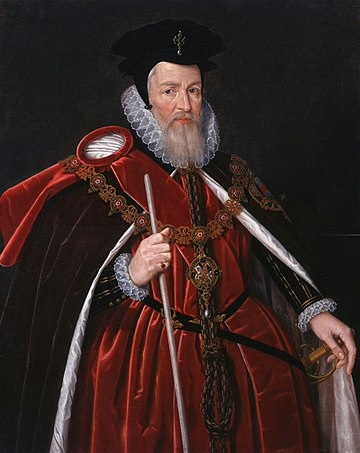
William Cecil, Lord Burghley, attributed to Marcus Gheeraerts, c. 1585, National Portrait Gallery


    Perhaps the Earl of Moray had set Mary up so she would be forced to abdicate her throne. Mary was a constant threat to Elizabeth I’s throne, and so, some have thought the letters fabricated by William Cecil to get rid of Mary once and for all. The outcome of the commission was Elizabethan in nature- there was not enough evidence to convict Mary of the crime, nor was there enough to acquit. The commission did serve its purpose, however. Mary’s reputation was smeared, her throne abdicated, and most importantly, in Elizabeth’s custody for the remainder of Mary’s life.


James Stewart, Earl of Moray, Hans Eworth, 1561, Darnaway Castle, Scotland


    The problem with the Casket Letters is that Mary’s rival, her half-brother, the Earl of Moray, produced them. The Earl of Moray was an ambitious man and I believe he wanted to rule Scotland. He could only do this if his half-sister was out of his way. I believe the Earl of Moray saw both Mary and Darnley as rivals to the throne. Therefore, in my opinion, Moray orchestrated Darnley’s murder, knowing that Mary would be implicated. When that didn’t go exactly according to plan, I believe Moray had the letters fabricated.


Friday, June 14, 2024


MERCY, MERCY, MERCY:
THE ARREST OF THOMAS CROMWELL


    How did King Henry VIII’s right hand man, fixer of all things, suffer such a tremendous downfall? Thomas Cromwell was brought in to orchestrate the downfall of Queen Anne Boleyn, the Dissolution of the Monasteries, religious reform, and the marriage to Anne of Cleves. Today, we will explore how all Cromwell achieved, ultimately, lead to his demise.


Thomas Cromwell, Earl of Essex, Hans Holbein the Younger, c. 1532-1533


    After the death of Queen Anne Boleyn, Cromwell thought himself to be safe. Cromwell and Anne had butted heads in the last months of her life over the Dissolution of the Monasteries. In the dissolutions, Cromwell had furthered his religious reform of England while also filling Henry VIII’s coffers. Anne was not on side with the crown profiting from the dissolutions; she had thought the money would be better spent on charity, education and institutions. Anne had even threatened Cromwell by approving of a sermon that essentially warned the king of his “evil councilors”. Anne went so far as telling Cromwell she’d like to see his head off. With the problem of Queen Anne Boleyn taken care of, Cromwell failed to notice other enemies waiting in the shadows.


Queen Anne Boleyn, Unknown, c. 1550, Hever Castle

    Cromwell continued to further his religious reform but he failed to notice Henry VIII becoming increasingly uneasy about the extent of religious change. Henry VIII was not a religious reformer- he was a Catholic through and through. He only agreed to religious reform when it suited him (i.e. his ability to marry Anne Boleyn). Importantly, Thomas Howard, Duke of Norfolk, was a major figure in the conservative faction and continuously undermined Cromwell’s religious initiatives.


Thomas Howard, 3rd Duke of Norfolk, Hans Holbein the Younger, c. 1539


    At the same time, Cromwell was cognizant of the increasing isolation of Henry VIII as a European power. Henry VIII had been excommunicated by the Catholic Church and was in constant struggle with Spain and France, both countries continually entering into secret alliances behind Henry’s back. Cromwell immediately recognized the need for the protection of England from the duplicitous countries.


    Cromwell began to look else were for support and his solution was the Protestant Schmalkaldic League. The League was created to provide protection to its members should King Charles V, Holy Roman Emperor, invade. Cromwell recognized the benefits of this alliance. At the time, the League was not accepting new members, or rather, would not accept Henry VIII. Cromwell proposed the idea of Henry entering into a marriage treaty with one of the daughters of the House of Cleves, perhaps in an effort to wiggle England into the League.


    Henry VIII decided that he would marry Anne of Cleves. Anne of Cleves arrived in England in 1539, ahead of the marriage ceremony. Whatever the reason, upon Henry meeting Anne, he decided he was repulsed by her and did not want to go through with the wedding. Henry tasked Cromwell with the unenviable mission of dissolving the marriage treaty. Cromwell could not find a solution, or would not find a solution, and the marriage went ahead. It was, however, never consummated. Henry was furious. He couldn’t fathom how he, King of England, would be forced to marry someone he did not want. Cromwell underestimated Henry’s resentment, increasingly growing over religious reform and a marriage of which he wanted no part.


Queen Anne of Cleves, Hans Holbein the Younger, c. 1539


    In a move that can only be described as SO Henry VIII, Henry rewarded Cromwell with the Earldom of Essex on 18 April 1540. Henry liked to lull his subjects into a state of contentment and ease prior to his fatal strike. Henry fully believed in keeping his friends close, and his enemies closer. Cromwell was grateful for the royal favor and did not see his enemies slowly emerging from the shadows.


    Thomas Howard, Duke of Norfolk, was sent to France to further an Anglo-Franco alliance, against Charles V. Norfolk was received by King Francis I of France and the proposition was favorable. In one visit, Norfolk had undermined Cromwell’s work with the Duchy of Cleves and changed the balance of power in England’s favor. Furthermore, war was on the horizon between the Duchy of Cleves and Charles V. The alliance with Cleves, the brainchild of Cromwell, would put England in a precarious position of declaring war on France, reversing the positive diplomacy between the two countries. France had recently solidified an alliance with the Ottoman Empire, the enemy of Charles V. Henry wanted no part of this.


    The Duke of Norfolk and Bishop Stephen Gardiner saw a unique opportunity. Henry VIII seemed to be taken with Norfolk’s niece, Katherine Howard. Katherine began to be pushed forward by Norfolk and Gardiner and they began planting ideas into Henry’s mind, such as: Cromwell could have secured an annulment from Anne of Cleves, Henry’s subjects were against Cromwell’s reforms, Cromwell was a heretic and he was working against the crown.


Possibly Queen Katherine Howard, Hans Holbein the Younger, c. 1540


    Cromwell was in the council chamber at Westminster, when at 3 PM on 10 June 1540, the Captain of the Guard entered the chamber and told Cromwell he had a warrant for his arrest.  The French Ambassador stated Cromwell threw his hat down on the chamber floor, furious. He looked about the room, asked the council members, was this the reward for his services? The council replied he should be judged according to the laws Cromwell himself had made. Thomas Howard, Duke of Norfolk, strolled up to Cromwell and snatched the Order of St. George from his neck. Cromwell’s Garter was then untied. Cromwell was put in a barge and brought to the Tower of London, via the Thames. Cromwell’s residence was then inventoried and goods were taken to the King’s treasury- a sure sign they would not be returned.


    The Spanish Chronicle differs slightly in its telling of the arrest: Cromwell arrived at Westminster and the meeting went ahead. Afterwards, the members attended dinner at Westminster Palace. While walking, a wind blew off Cromwell’s hat and it fell to the ground. It was custom when one man’s hat fell off, the others doffed theirs in a sign of respect. The other men kept their hats on. Cromwell took this as a bad omen. While dining, no one conversed with Cromwell. After dinner, the council entered the council chamber once more, and when Cromwell went to his in his chair, the Duke of Norfolk said, “traitors do not sit amongst gentlemen”.


    A Bill of Attainder was brought against Cromwell declaring him guilty of treason. Cromwell languished in the Tower of London, his execution put on hold until the amicable annulment between Henry VIII and Queen Anne of Cleves. Cromwell wrote a letter to Henry in support of the annulment, ending the correspondence chillingly with “Most gracious Prince, I cry for mercy, mercy, mercy”.


    Thomas Cromwell, Earl of Essex, was beheaded on Tower Hill on 28 July 1540. Ironically, King Henry VIII married Queen Katherine Howard on the same day. In a shocking move, while delivering his speech on the scaffold, Cromwell seemed to deny his Protestant faith and alluded to dying a Catholic. Cromwell’s head was placed on a spike on London Bridge and his remains were laid to rest in the Chapel of St. Peter ad Vincula at the Tower of London.


Memorial Plaque of Those Buried in the Chapel of St. Peter ad Vincula at the Tower of London, © All Things Tudors, May 2023


    In time, King Henry VIII came to regret Cromwell’s death. He later alluded Cromwell’s downfall was brought about by pretexts and false accusations of the factions of the court. I don’t believe Henry VIII felt guilty about his death in a personal way; I believe Henry was selfishly remorseful of killing a perfectly capable minister of whom he could leave the work of the realm.

Elizabeth de Valois: Daughter of France, Queen of Spain

            Elizabeth de Valois lived a brief but remarkable life at the heart of Europe’s most powerful courts. Born a French princess a...